The mudroom often becomes one of the hardest-working spaces in the house, especially when you have kids at home. It’s where backpacks get dropped, shoes come off, coats pile up, groceries pass through, and muddy kids and pets hopefully stop before making it any farther.
When you’re building a custom home, a thoughtfully designed mudroom can help contain the everyday clutter that would otherwise spread throughout the house. But making the space work requires more than adding a pretty bench and a few hooks.
Here are some of the best family mudroom ideas for creating a space that works for real life.
Put the Mudroom Where Your Family Actually Enters
The first step in designing a functional mudroom is choosing the right location.
Your mudroom should ideally be near the entrance your family uses most often. In many Idaho homes, that means placing it between the garage and the main living areas.
This creates a natural transition zone between outside and inside. Instead of carrying muddy shoes, wet coats, backpacks, and sports equipment through the house, everyone has a place to drop their belongings as soon as they walk through the door.
Think about your family’s daily routine when planning your custom home. Which door will you use when you come home from work? Where will the kids enter after school? How will you bring groceries into the kitchen?
The best mudroom layout is one that fits naturally into the way you already live.
Give Everyone Their Own Drop Zone
Shared storage sounds efficient until everyone starts piling their belongings into the same space.
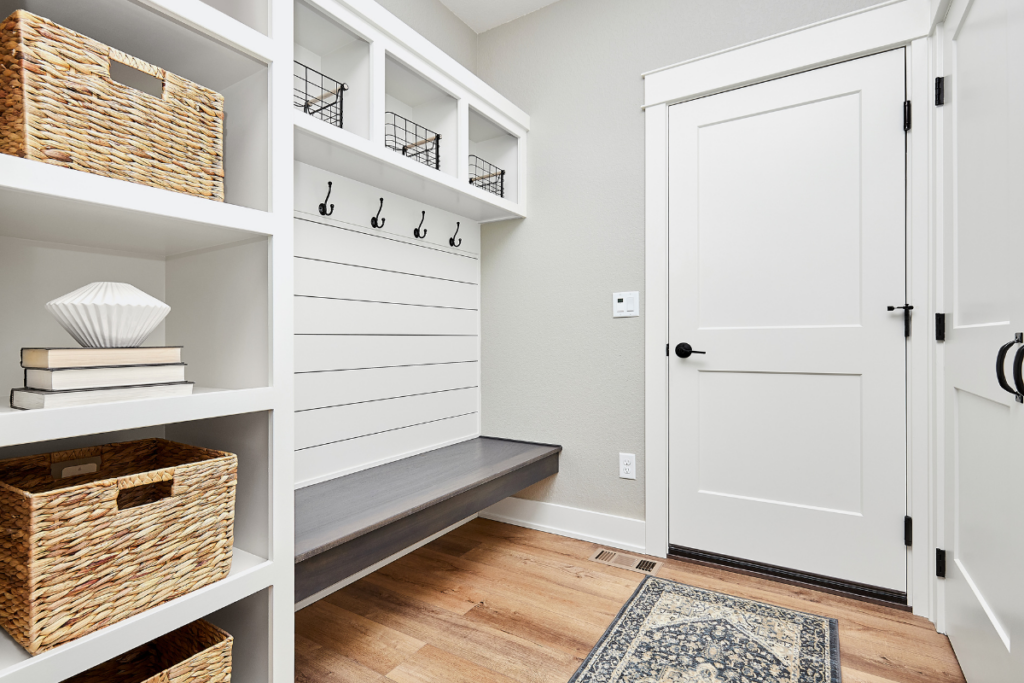
If you have room, create an individual drop zone for each family member as part of your custom mudroom design. This might include a hook, cubby, drawer, basket, or small section of cabinetry.
Giving everyone a designated spot makes it easier to keep everyday items organized and, just as importantly, makes them easier to find when it’s time to leave.
Younger kids may benefit from lower hooks they can reach themselves, while upper shelves can hold less frequently used items.
Even a small mudroom can incorporate personalized storage. You don’t necessarily need a wall of custom lockers. A row of sturdy hooks with baskets above or below can accomplish much of the same thing.
Include a Place to Sit
A mudroom bench is one of the simplest additions you can make, but it can make the room significantly more functional.
Having a place to sit makes it easier for kids and adults to put on shoes, boots, and winter gear. A bench can also provide valuable mudroom storage underneath. Consider drawers, cubbies, or baskets below the seat for shoes and other frequently used items.
Just make sure you leave enough open space for sitting. It can be tempting to maximize every inch with storage (and sometimes clutter sneaks in), but a mudroom works best when there is still room to comfortably move around and use it.
Plan for More Shoes Than You Think
Shoes have a way of multiplying near the door. Instead of relying on a small shoe rack, build plenty of shoe storage into your mudroom design from the beginning.
Open cubbies are convenient for shoes that get worn every day, while drawers or cabinets can hide less attractive footwear. If your family regularly wears tall boots, make sure at least part of your storage is designed with enough vertical clearance for them.
For Idaho families, it’s also worth thinking about what happens when those shoes are covered in snow, rain, or mud. Consider creating a designated spot for wet and dirty footwear so it doesn’t end up scattered across the room. A boot tray or dedicated area near the entrance can help contain water and mud while shoes dry. If you have the space, you could even incorporate a utility sink nearby for rinsing particularly muddy shoes, boots, or outdoor gear.
The goal is simple: give the mess a place to stop before it makes its way into the rest of your home.
Choose Flooring That Can Handle Real Life
The mudroom isn’t the place for delicate flooring.
Between wet boots, muddy paws, melting snow, and dirt from outside, this room needs materials that can stand up to moisture and frequent cleaning.
Tile and luxury vinyl plank are popular mudroom flooring options because they are durable and relatively easy to maintain.
You may also want to choose flooring that visually connects with the surrounding rooms while still providing the durability a high-traffic entryway needs.
RELATED CONTENT: Best Flooring Options for Idaho Homes
Include Closed Storage for the Clutter
Open cubbies look beautiful when everything inside them is perfectly organized. But real life doesn’t always cooperate.
A combination of open and closed storage tends to work best in a functional mudroom. Keep frequently used items within easy reach while using cabinets and drawers to hide the things you don’t necessarily want on display.
Closed storage is especially helpful for seasonal gear, reusable shopping bags, sports equipment, pet supplies, sunscreen, hats, gloves, and other miscellaneous items that tend to collect near the door.
Create a Landing Spot for the Little Things
Not all mudroom clutter is big. Keys, mail, sunglasses, chargers, permission slips, wallets, and other small items can quickly cover a countertop if they don’t have designated homes.
A small drop zone in your custom home mudroom can help keep these everyday essentials organized. This might be a shallow drawer, a small countertop, a wall-mounted organizer, or a charging drawer for electronics.
Just be careful about adding too much countertop space without a purpose. Any large, empty horizontal surface has the potential to become a clutter magnet.
Consider Combining the Mudroom & Laundry Room
If square footage is limited, combining your mudroom and laundry room can be an efficient way to make one space work harder. This design is especially practical when the room is located near the garage or a frequently used side entrance.
If you’re planning a combined space, pay extra attention to the layout. Laundry appliances, doors, cabinetry, benches, and walkways all need enough clearance so the room doesn’t become cramped when multiple people are using it.
Don’t Forget About Outlets
Electrical outlets aren’t the most exciting part of mudroom design, but you’ll appreciate having them later. Think about whether you might want to charge phones, tablets, watches, cordless vacuums, or other devices.
A hidden charging station inside a drawer or cabinet can be particularly useful for keeping devices and cords off the kitchen counter.
Planning outlet locations during your custom home build is much easier than realizing afterward that you need power somewhere you don’t have it.
Make It Easy to Clean
A family mudroom is going to get dirty. That’s part of its job. Choose finishes with that reality in mind.
Washable paint, durable cabinetry, and easy-to-wipe surfaces can all make maintenance easier. You may also want to avoid finishes that show every fingerprint, scuff, or speck of dirt.
The easier your mudroom is to clean, the more comfortable you’ll be actually using it the way it was intended.
Design for the Family You Have
Pinterest can provide plenty of beautiful mudroom inspiration, but your family’s habits should ultimately drive the design.
A family with four school-age children will need a different mudroom than a couple with two dogs. Someone who skis every weekend will have different storage needs than someone who needs a place for gardening supplies and work boots.
A custom home gives you the opportunity to design around your real routines rather than trying to fit your life into a generic floor plan.
Build a Mudroom That Makes Everyday Life Easier
The best mudrooms aren’t necessarily the biggest or the most elaborate. They’re the ones that make coming and going a little easier.
A well-designed mudroom gives shoes, backpacks, coats, keys, sports gear, and all the other pieces of family life a designated place to land. It can reduce clutter throughout the rest of your home while creating a practical transition between indoors and out.
When you’re building a custom home, these everyday details matter. At Pleasant View Construction, we can help you think through how your family actually uses your home and design spaces that work for the way you live.