When people talk about a “well-built” custom home, they often point to the finished product: clean lines, beautiful materials, and a space that just feels right. But true craftsmanship isn’t something you notice only at the end. It’s built deliberately, decision by decision, long before paint colors and light fixtures go in.
Quality craftsmanship in custom homes is the result of systems, standards, and experienced oversight—not luck.
If you’re building a custom home and want it done right, here’s how to ensure quality craftsmanship throughout the entire process, from the foundation to the final walkthrough.
1. Start With a Builder Who Builds, Not Just Manages
Not all custom builders operate the same way. Some act primarily as project managers, subcontracting everything and rarely stepping onto the jobsite. Others are deeply involved in the day-to-day build and understand how things should actually be constructed, not just scheduled.
Quality custom home craftsmanship starts with a builder who:
- Has hands-on construction experience
- Understands sequencing and trade coordination
- Can spot problems before they’re covered up
- Cares about what’s behind the walls, not just what shows
A builder who knows construction at a technical level will ask better questions, demand higher standards, and catch details that others miss.
2. Demand Clear Construction Standards (Not Assumptions)
Craftsmanship suffers when expectations live only in someone’s head.
A high-quality custom home build should be guided by clearly defined standards for things like:
- Framing tolerances and layout accuracy
- Moisture control and flashing details
- Fastening schedules and structural connections
- Finish alignment (trim, cabinets, tile, millwork)
- Jobsite cleanliness and material protection
Ask your builder how they define “done right.” If the answer is vague, that’s a red flag. Builders who prioritize craftsmanship can explain exactly how quality is measured on their jobsites.
3. Pay Attention to the Parts You’ll Never See
The best craftsmanship often disappears once drywall goes up, but it matters more than anything else.
The highest custom home construction quality includes:
- Proper foundation prep and drainage
- Straight, square, and well-braced framing
- Thoughtful mechanical routing (HVAC, plumbing, electrical)
- Air sealing and insulation details
- Water management at every penetration
These details affect comfort, energy efficiency, durability, and long-term maintenance. A home that looks beautiful but skips these steps may cost you far more over time.
4. Use Skilled Trades, Not Just Available Trades
The quality of a custom home is only as good as the trades building it.
Experienced builders work with a trusted network of:
- Framers who build straight and true
- Electricians who think ahead, not just wire to code
- Plumbers who plan clean runs and future access
- Finish carpenters who obsess over alignment and detail
- Tile installers who understand layout, substrate prep, and longevity
Cheap labor almost always shows—sometimes immediately, sometimes years later. Quality craftsmanship requires trades who take pride in their work and are held to consistent standards.
5. Insist on Regular Job Site Oversight
Craftsmanship doesn’t maintain itself.
Strong builders:
- Walk the job site frequently
- Review work at critical stages
- Catch issues early before they’re buried
- Communicate corrections clearly with trades
- Hold the line on quality, even when schedules get tight
This oversight is especially critical during framing, waterproofing, and finish stages. Once mistakes are covered, fixing them becomes expensive or impossible.
6. Understand That “Code-Compliant” Is the Minimum, Not the Goal
Building code sets the floor, not the ceiling. The best builders maintain the highest home-building standards in areas like:
- Structural reinforcement
- Fastening patterns
- Moisture protection
- Energy efficiency
- Sound control
- Durability details
If a builder frequently defends decisions by saying “it meets code,” ask what they do beyond code. The best custom homes are built with long-term performance in mind, not just inspection approval.
7. Evaluate Craftsmanship at the Finish Stage, Not Just Aesthetics
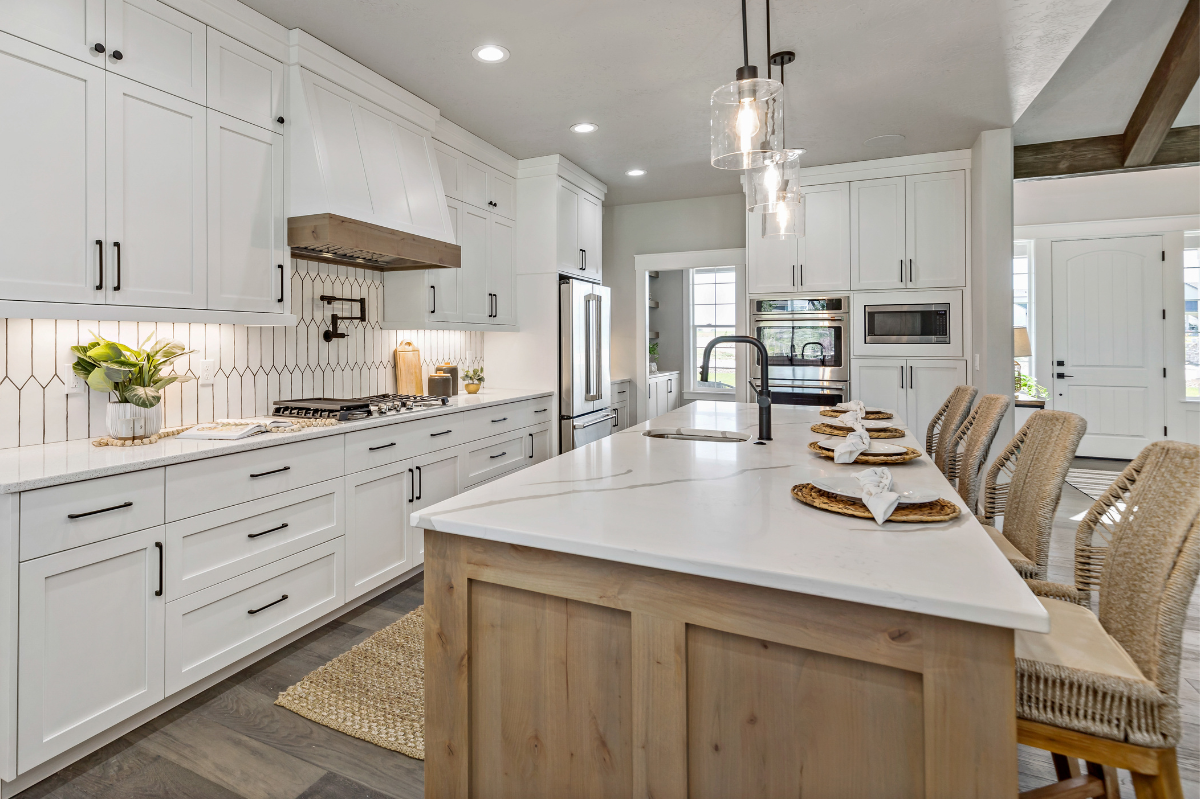
Finish work is where craftsmanship becomes obvious, but it’s also where many shortcuts show.
Look for:
- Straight, level trim and tight joints
- Consistent reveals on cabinets and doors
- Clean transitions between materials
- Tile layouts that feel intentional, not rushed
- Hardware and fixtures installed with care and alignment
These details reflect how much attention was paid throughout the build. Sloppy finishes often signal rushed work behind the scenes, and they will not stand the test of time.
8. Ask How Issues Are Handled, Not If They Happen
No custom home is built without challenges. The difference lies in how they’re handled.
Quality-focused builders:
- Address issues proactively
- Take responsibility rather than deflecting blame
- Communicate openly with homeowners
- Fix problems the right way, not the fastest way
- Stand behind their work after move-in
Craftsmanship isn’t just about construction; it’s about accountability.
9. Choose a Builder Who Builds for the Long Term
A truly well-built custom home should:
- Age gracefully
- Perform efficiently
- Feel solid and intentional
- Require less maintenance over time
- Retain long-term value
Builders who care about craftsmanship think years ahead, not just to the final draw.
Final Thoughts: Craftsmanship Is a Philosophy, Not a Feature
Quality craftsmanship isn’t one upgrade or one finish choice. It’s a mindset that influences every decision from the foundation to the final walkthrough.
When you work with a builder who understands construction deeply, sets clear standards, partners with skilled trades, and prioritizes long-term performance, the result is a home that doesn’t just look custom—it feels custom.
If you’re planning a custom home and want craftsmanship that goes beyond surface-level details, working with an experienced, hands-on builder makes all the difference.
At Pleasant View Construction, quality craftsmanship isn’t an add-on. It’s the baseline.
If you’re ready to build a home that’s thoughtfully constructed from the ground up, we’d love to talk through what that looks like and how we approach every detail with intention.